

Translated the complete knowledge library provided by UNESCO
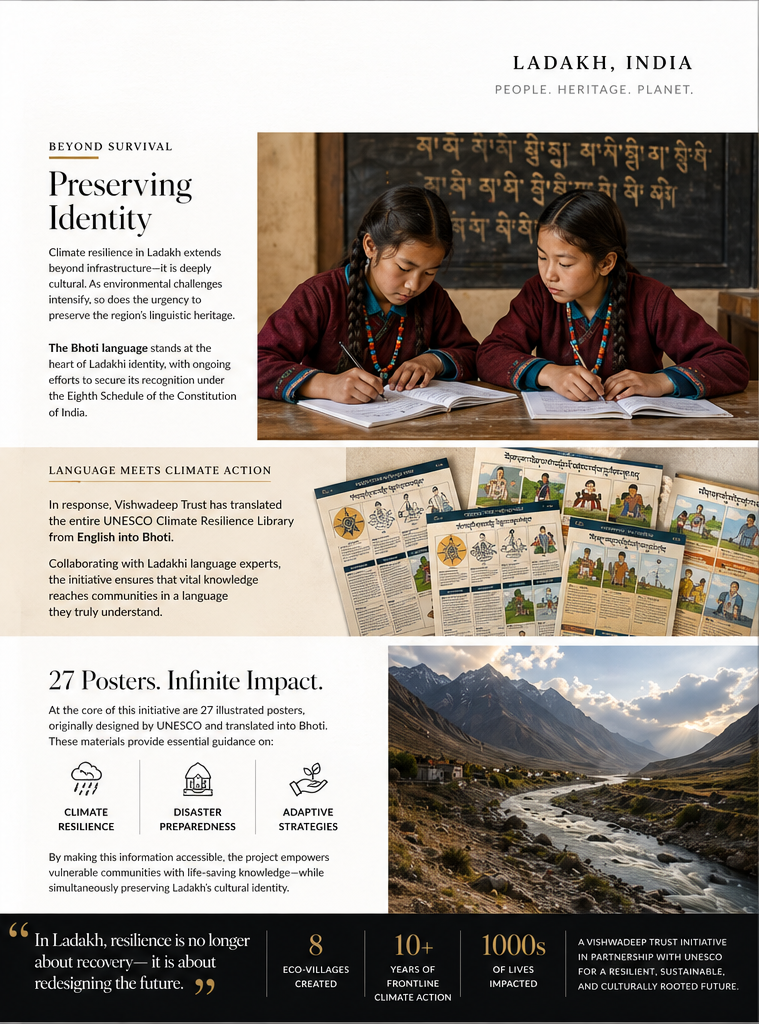
Ladakh is fighting for the recognition of its Bhoti language under the Eighth Schedule of the Constitution of India in an effort to safeguard its unique linguistic and cultural heritage. As one of the world’s most fragile mountain ecosystems, Ladakh is also on the frontlines of climate change, experiencing increasingly frequent flash floods, glacial retreat, water insecurity, and extreme weather events.
Yet, one of the greatest barriers to climate resilience is not the lack of information—it is the lack of access to information in a language people understand. Across India’s remote Himalayan and tribal regions, many of the communities most vulnerable to climate change are not fluent in English or Hindi. As a result, critical knowledge on disaster preparedness, climate adaptation, and environmental stewardship often fails to reach those who need it most.
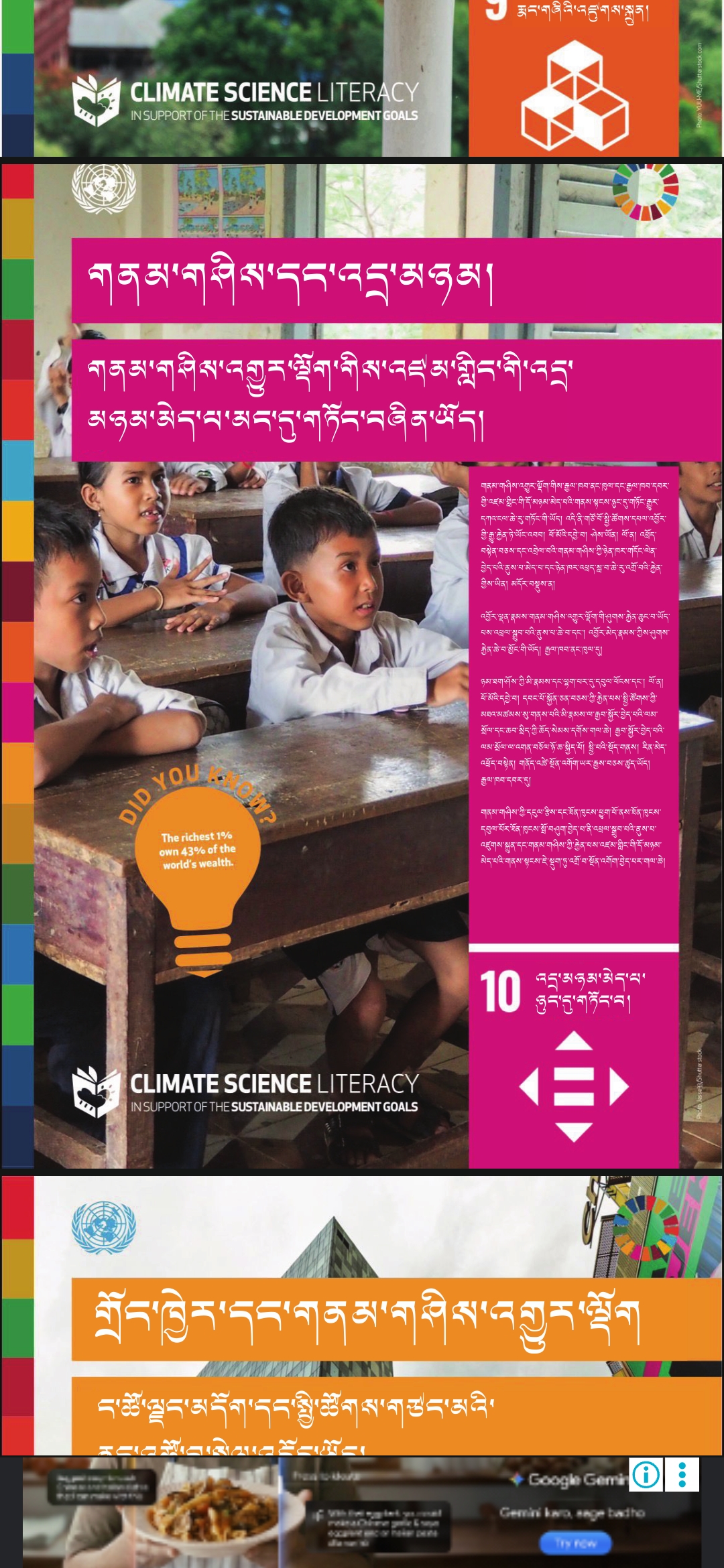
To bridge this gap, organization, Vishwadeep Trust, India-based nonprofit organization translated the complete organization,UNESCO,United Nations Educational, Scientific and Cultural Organization Climate Resilience Library from English into Bhoti, working alongside renowned Ladakhi language experts and local educators. The library comprises 27 illustrated educational posters that explain climate change, disaster risk reduction, ecosystem conservation, and community resilience in a simple and practical manner.
This initiative is more than a translation project—it is an investment in climate justice, indigenous knowledge, and linguistic preservation. By making global climate science available in Bhoti, we are empowering indigenous communities with life-saving knowledge while preserving a language that carries centuries of ecological wisdom and cultural identity.
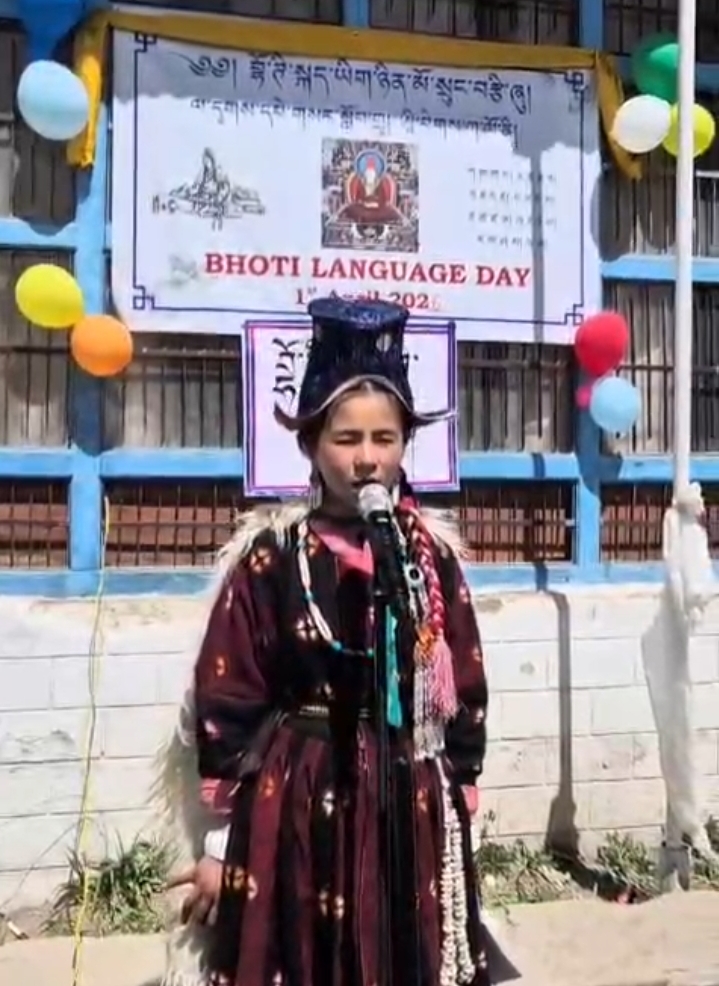
Our vision is to print, publish, and distribute these Bhoti Climate Resilience Libraries across community knowledge centres, schools, monasteries, public libraries, youth groups, and all eight eco-villages established by Vishwadeep Trust in Ladakh. These resources will educate children, women, farmers, community leaders, and disaster-prone households, helping them better prepare for climate risks while fostering environmental stewardship for future generations.
We invite governments, foundations, universities, corporations, and individual donors to join us in ensuring that no community is left behind simply because climate information is unavailable in their mother tongue. Your support will help us print and distribute the Climate Resilience Library, conduct community awareness workshops, train local volunteers, and expand access to climate education across remote Himalayan villages.
Every contribution helps preserve an endangered language, strengthen indigenous resilience, and ensure that the people standing on the frontlines of climate change have the knowledge they need to protect their families, livelihoods, and environment.
We extend our heartfelt gratitude to people, Benno Boer, UNESCO Director for his vision and leadership in promoting climate education, Madhumita Chatterjee, Director of ABBS University for her unwavering encouragement, and to our dedicated translation team, Tsering Doma, Ladakhi language expert, Loknath tiwari and Ishae tundup – Project contributor — whose expertise and commitment made this pioneering initiative possible. Together, they have helped transform global climate knowledge into a locally accessible resource that can save lives, preserve culture, and inspire climate action across the Himalayas.
Support this initiative. Preserve a language. Empower a community. Build climate resilience where it is needed most.